Protection starts inside the case
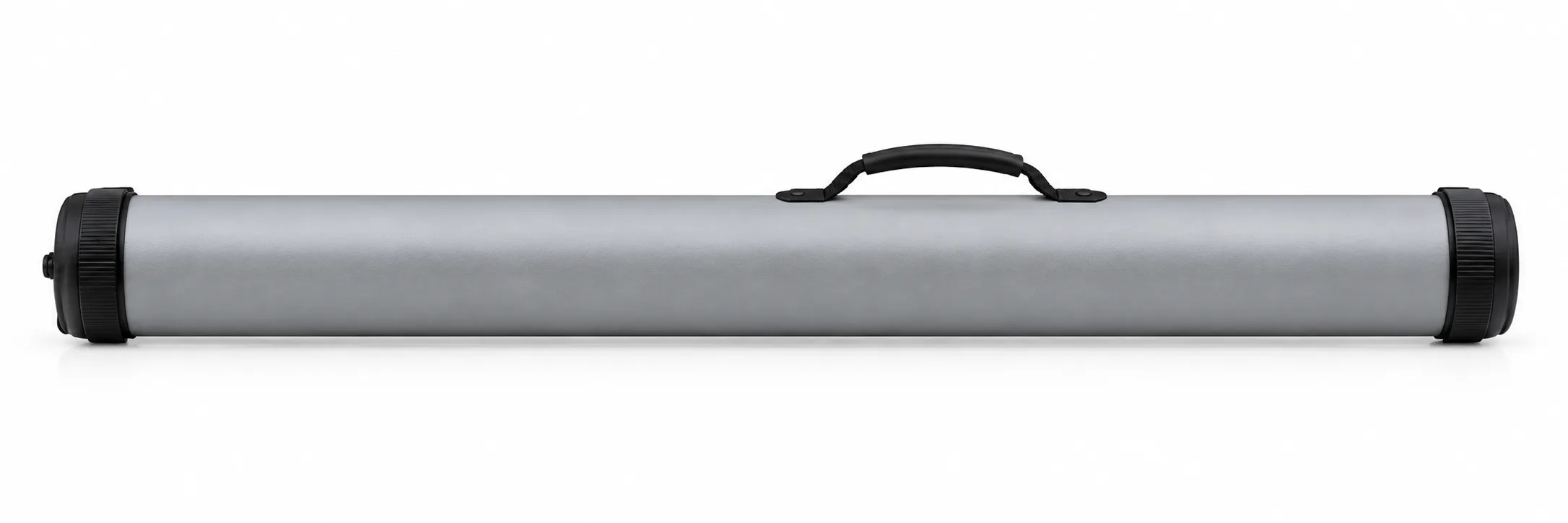
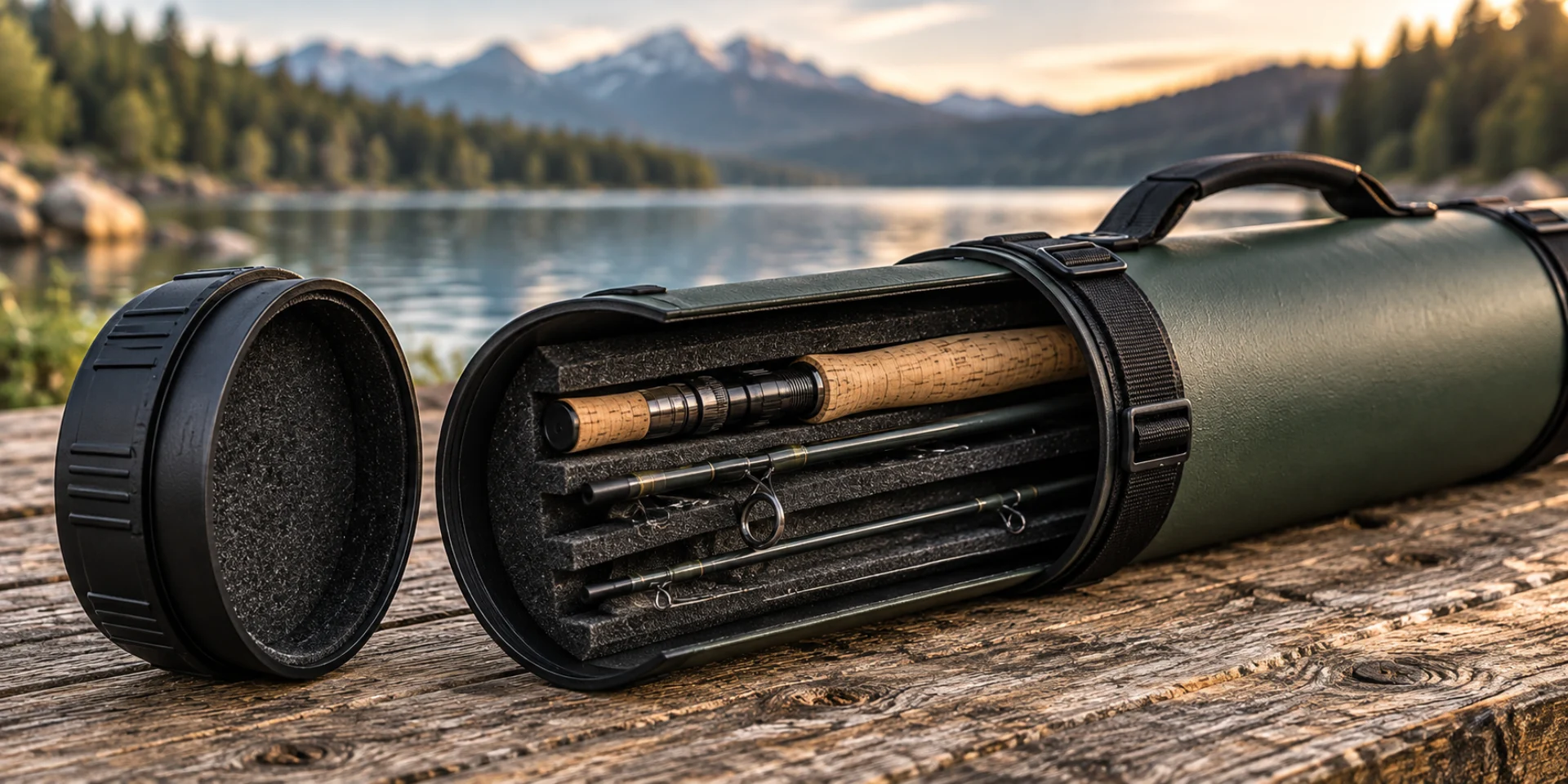
A rigid outer tube creates protected space, but it does not organise the rod for you. Inspect the tip and rings, align sections so the largest rings face clear space, and place loose ties only on unobstructed parts of the blank. Control movement at the butt end rather than making the tip a stop. With two to four rods, keep each set identifiable and separated. Close the tube, tilt it slowly and listen for travel before taking it to the car; any catch or knock is a reason to repack.
Map every projecting and delicate point
Run a visual check from butt to tip before packing. Identify the largest ring, any exposed whipping and the position of the tip when sections are brought together. These are areas to leave free, not convenient places for a tight strap. If a rod sock is used, confirm it sits over the rings without pulling one sideways or creating a hard lump.
Tie a stable bundle without loading the rings
Place section ties on clear lengths of blank and use only enough tension to prevent the group opening. The aim is organisation, not compression. Offset the tip from a hard end and rotate the largest ring into a free area. Remove small loose accessories that could travel along the tube and meet the rod during braking or carrying.
- Keep ties away from rings and whippings.
- Orient the butt ring into clear space.
- Remove weights and other loose tackle.
- Test both loading and unloading movements.
Control lengthwise movement from a sound contact point
If the sections slide, their energy ends at one of the closures. Use removable packing to reduce this travel, with support directed towards a stable protected area rather than the tip. Do not wedge the rod by bending it. Close the tube, change its angle gently and listen; a distinct slide shows that the packing is not yet doing its job.
Keep two to four rod sets independent
Alternate ring direction when two rods share the tube and place a separator between sets. Pull each one out in turn to confirm that a strap cannot hook its neighbour. For three or four rods, establish a fixed loading sequence and photograph the finished bundle. The organisation should make sense at a dark car park as well as at home.
| Rod count | Packing focus | Pass condition |
|---|---|---|
| One | End travel | Tip never acts as stop |
| Two | Alternated rings | Either set leaves alone |
| Four | Fixed loading order | No tie hooks another ring |
Inspect before fishing and before storage
Open the tube horizontally in a clean place and remove rods in the planned order. If something resists, stop and find the catch rather than pulling harder. Look along the ring alignment, examine the tip and check the ties. A new mark, noise or change in resistance is useful evidence that the internal arrangement has shifted.
After the session, remove dirt from covers and allow damp soft parts to dry separately before long-term storage. Keep a photograph of the successful packed layout. Repeating the same method makes unusual movement obvious and is more dependable than repacking from memory each time.
Specify the protected bundle, not a generic rod
Send the longest protected section, maximum width and height, rod count and clear end-on photographs. Explain whether reels are removed and which sleeves, ties or dividers remain. Those details allow the discussion to concentrate on clearance around the rings and a sensible loading sequence.
Rodborne makes rigid PVC tubes in France, personalised from 75 to 220 cm for one to four rods. The price of €109.99 includes VAT and delivery to EU addresses. For UK delivery, shipping, taxes and possible import costs require separate confirmation. Measure the actual bundle before asking for a recommendation.
Hard PVC fishing rod tubes
Send an end-on photo and measurements for a French-made rigid PVC tube. The €109.99 delivered price is for EU addresses; UK shipping, taxes and import charges are separate.
Frequently asked questions
Does a rigid tube protect rod rings on its own?
It protects the outer space, but rings can still meet another section if the contents move. Correct orientation, separate rod sets and controlled end travel are still required inside the tube.
Where should section ties be placed?
Put them on clear areas of blank, away from ring frames, whippings and the tip. Tighten only enough to keep sections organised without bending them or pressing a ring.
How can two rods be stopped from catching?
Face their rings into complementary open spaces, use a separator, and test that either bundle can be withdrawn alone. Repack if a tie or ring drags the other set.
Can one packing layout work for one and four rods?
Usually it needs adjustment because the free space and balance change. Use removable, labelled packing for each regular load and carry out the tilt test whenever the configuration changes.