Measure dry, pack clean, unpack at home
Break the surf rod down and measure its longest protected section rather than working from the assembled length. Record the butt ring's maximum projection and arrange all sections so the tip is not a contact point. For several rods, alternate rings and measure the whole tied bundle. After a shore session, remove obvious sand before travel, then unpack at home, follow the rod maker's cleaning guidance and dry soft covers separately. A tube solves the transport geometry; a consistent coastal routine keeps that geometry clean and usable.
Establish the true length of the shore-rod sections
The assembled fishing length is not the tube measurement. Put the rod into its normal travel state, keep any tip guard fitted and measure the longest section. Repeat for every rod, as joint layout and handles can change packed length even within the same broad class. Photograph the endpoints and note which piece sets the maximum.
Keep the butt ring and tip away from hard stops
Tie sections on open areas of blank and rotate the largest ring towards free space. Leave the tip clear of the closure and control lengthwise travel from a better-supported area near the butt. Put the bundle through the opening slowly; repeated brushing at the same ring is evidence that the loading angle or clearance needs changing.
- Include tip guards in the length measurement.
- Show the largest ring in an end-on photograph.
- Restrain movement without using the tip as a stop.
- Rehearse removal before the first shore trip.
Build a repeatable two-to-four-rod layout
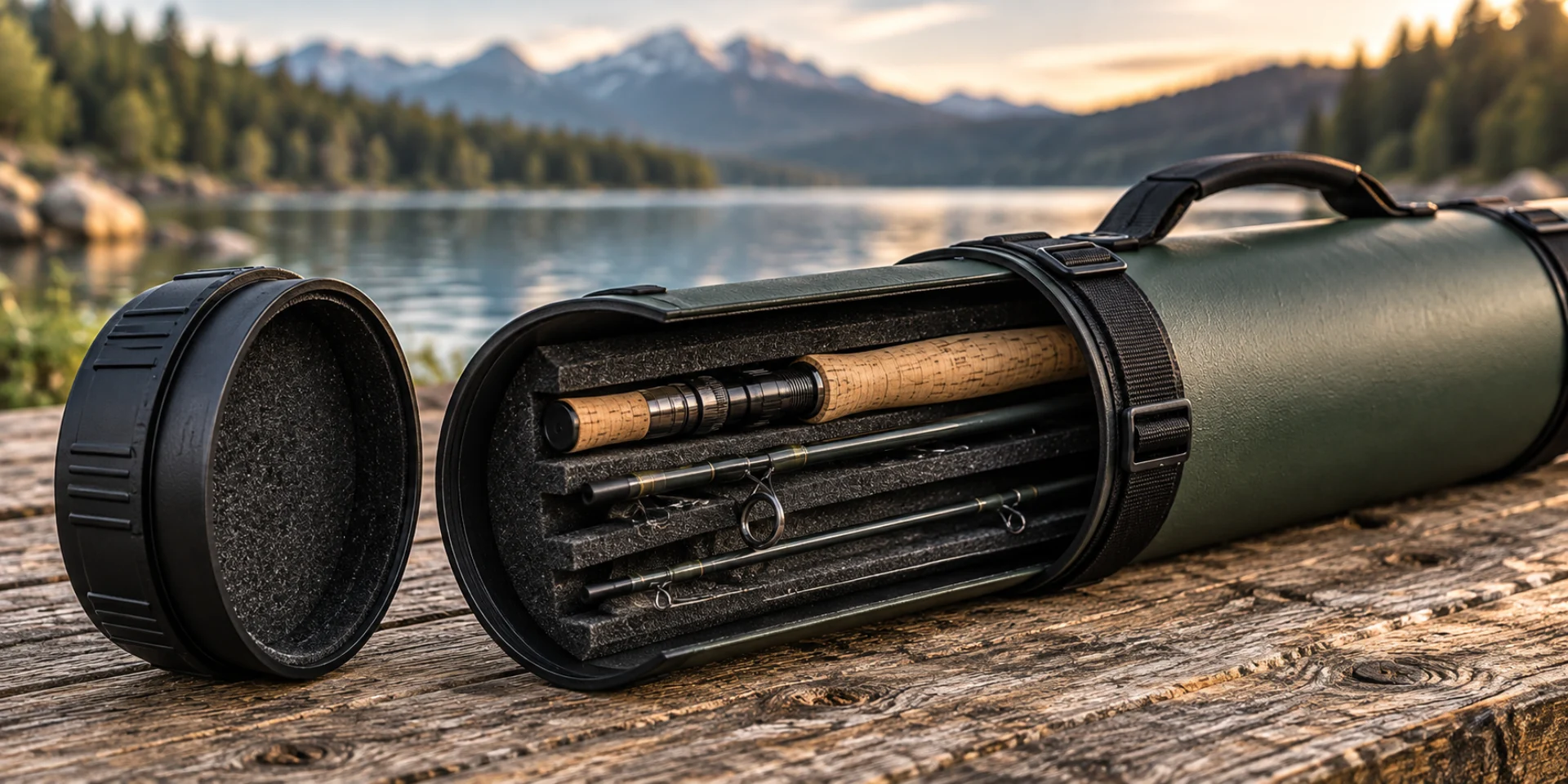
Keep each set of sections tied and identifiable. With two rods, alternate ring direction and separate the bundles. With three or four, establish a fixed loading order, add every divider you plan to use, and measure the complete width and height without squeezing the rings. Pull each rod back out alone to find any hidden hook between ties and frames.
| Load | Arrangement | Final test |
|---|---|---|
| One shore rod | Centred tied sections | No end-to-end knock |
| Two rods | Rings alternated | Bundles leave separately |
| Four rods | Fixed order with dividers | No compressed ring |
Keep beach residue out of the long-term pack
At the end of the session, remove obvious loose sand before placing the sections back for the drive. Close the empty tube when it is lying near sand, and load from the cleanest practical surface. Once home, unpack everything again. Clean the rod according to its manufacturer's advice and allow sleeves, ties and removable packing to dry separately.
Inspect around the tube openings before the next trip and remove any remaining particles. Check rings, whippings and joints as part of the same routine. The goal is not to claim that a container eliminates coastal maintenance, but to prevent a carefully arranged bundle being repeatedly drawn across trapped grit.
Measure the loading route through the vehicle
A long tube may fit diagonally in the cabin while still being difficult to pass through the boot aperture. Measure the narrowest opening, the angle around folded seats and the final resting place once other tackle is aboard. Use a light former of the planned length to rehearse both loading and removal.
Choose a position where heavy tackle will not be stacked on the tube and where it can be restrained during normal driving. At the beach, remove it before surrounding luggage blocks the path. A predictable handling sequence reduces hurried contact with doors, rocks or the ground.
Send measurements that describe your shore setup
State the longest section, maximum ring projection, number of rods, bundle width and height, normal protection and vehicle type. Add end-on and side photographs. Mention whether the load varies between a single rod and a fuller session so both internal arrangements can be considered.
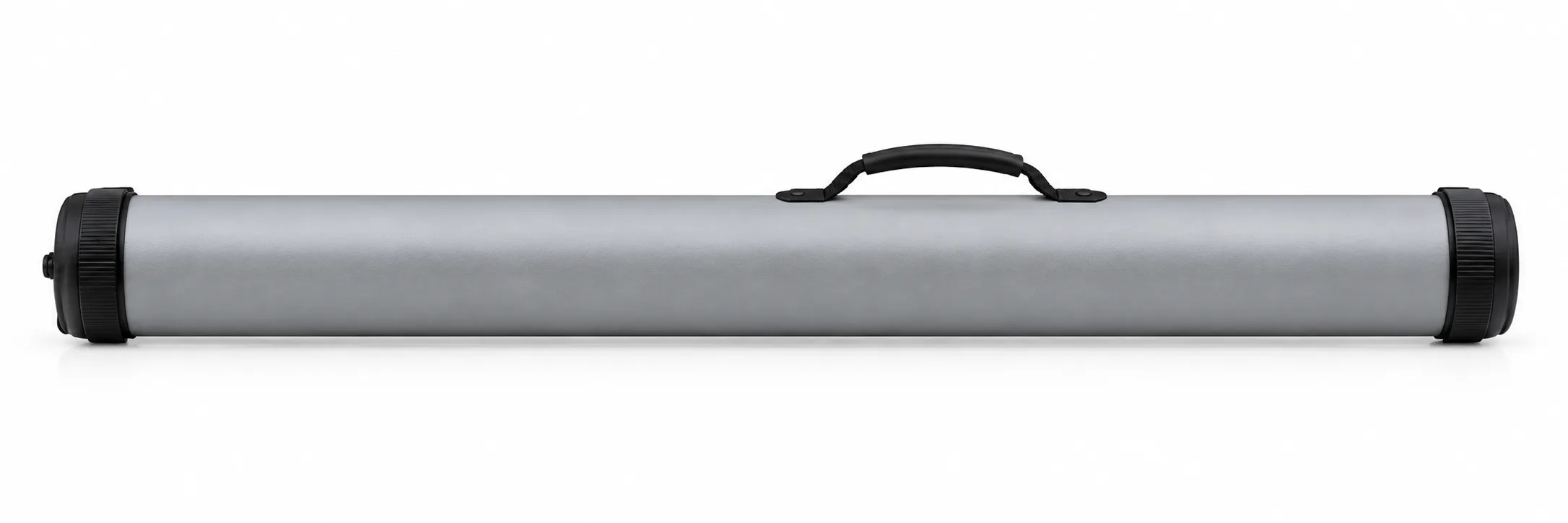
Rodborne makes PVC tubes in France for one to four rods and personalised lengths from 75 to 220 cm. The €109.99 price includes VAT and delivery to an EU address only. UK delivery, taxes and any import charges need separate confirmation. A detailed WhatsApp message lets the discussion begin with fit rather than assumptions.
Surfcasting rod tubes
Share the long-section and butt-ring dimensions for a French-made PVC tube. €109.99 covers VAT and EU delivery; UK shipping, taxes and import charges are separate.
Frequently asked questions
How long should a surfcasting rod tube be?
Measure the longest section in its actual travel configuration, including the tip guard. Report the end packing you intend to use rather than deriving case length from the rod's assembled fishing length.
Can four surf rods share one tube?
They can if the complete arrangement is measured, rings are given clearance and each bundle can be withdrawn independently. Use a fixed loading order and adapt packing when carrying fewer rods.
Should a shore rod stay packed after the drive home?
Unpack it at home, follow the tackle maker's cleaning instructions, and dry soft covers separately before longer storage. The tube is part of the journey, not a replacement for post-session care.
Which measurements help with a surfcasting enquiry?
Provide longest packed length, maximum width and height at the rings, full bundle dimensions, rod count, photographs and the intended vehicle arrangement.