What the job really involves
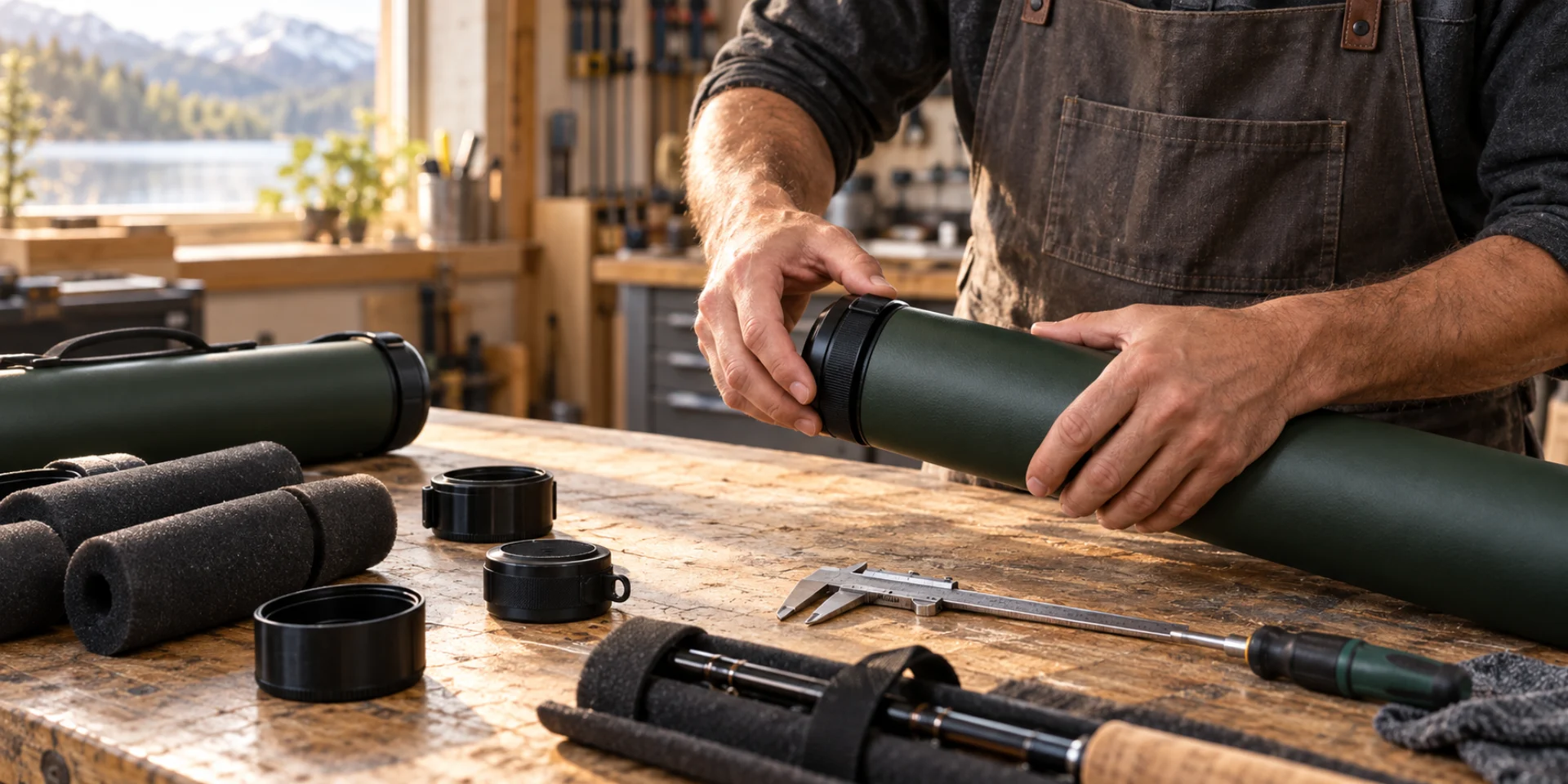
A DIY tube is more than a length of pipe. Before buying material, measure the longest protected rod section and the complete width and height of the bundle. Plan an accessible closure, smooth every surface the rod may pass, organise padding so the tip is not used as a stop, and decide how the loaded tube will be carried. Build and test a full-size dummy before inserting valuable tackle. If you need an unusual length, a clean finish or space for several rods, compare the tool, component and trial costs with a made-to-measure tube before committing.
Write the specification before visiting the merchant
Break down the rod exactly as it will travel and measure the longest protected section. Record the maximum ring projection, then repeat the exercise with every rod you want to carry. One, two and four-rod loads need different internal organisation. Draw the end view of the finished bundle rather than choosing pipe from the blank diameter or a familiar plumbing size.
Design the ends, access and packing together
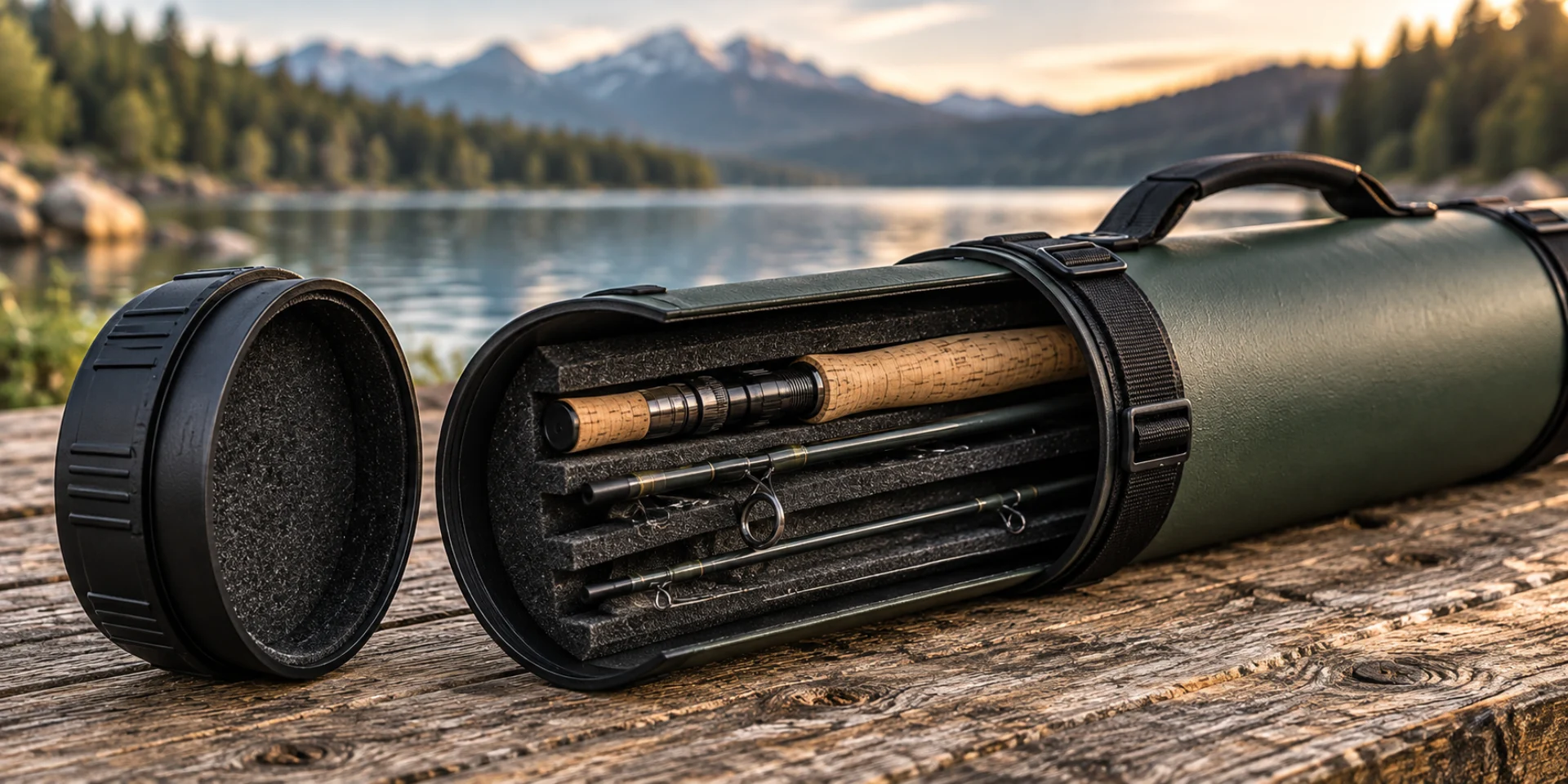
The tube body provides the outer form, but the ends determine usable length and day-to-day access. At least one end needs to open without the mechanism brushing a tip or ring. Any internal fitting reduces the space you measured, so mock it up at full depth. Inspect all contact surfaces and make sure nothing projects into the loading path.
- Body sized from the finished rod bundle.
- An opening that remains usable when the tube is loaded.
- Smooth, inspected surfaces along the full loading path.
- Separate control of end-to-end and sideways movement.
- A carrying point tested with the real load inside.
Use suitable tools and stop for inspections
Secure the PVC with equipment intended for the operation and follow the tool manufacturer's safety guidance. Wear the specified personal protection. After cutting or drilling, inspect and finish every accessible edge on both sides; an outside edge that looks tidy says nothing about a burr inside the tube where a ring will pass.
Validate the maximum and minimum load
A large tube may seem generous with one rod yet allow too much movement. At four rods, the same space can become awkward because rings and ties interlock. Test the maximum load with every sleeve, strap and divider in place, and confirm that each rod can be removed independently. Do not squeeze rings to make an optimistic diameter work.
| Load | Likely design issue | Useful test |
|---|---|---|
| One rod | Excess movement | Slow tilt in both directions |
| Two rods | Rings meeting | Independent withdrawal |
| Four rods | Congested opening | Complete loading rehearsal |
Compare the true DIY cost, not pipe alone
List end fittings, internal packing, carrying hardware, consumables and any tool you do not own. Add time for a full-size mock-up and the possibility of replacing a part after a poor cut or undersized opening. DIY can be satisfying when the requirement is simple and the workshop is already equipped, but the first material price is not a fair comparison with a complete tube.
Make the decision from your own constraints
Choose DIY if you have suitable tools, can test safely and accept the time needed to refine the details. Choose made-to-measure if avoiding repeated prototypes, handling an unusual bundle or obtaining a coherent finished product matters more. Neither answer should be based on a generic online diameter; both require the same honest rod measurements.
The personalised range covers 75 to 220 cm and one to four rods. The EU price for a Rodborne tube is €109.99 including VAT and delivery to an EU address. For the United Kingdom, delivery, taxes and any import charges are assessed separately. Send the longest section, maximum bundle dimensions and number of rods to compare your proposed build with the available range rather than guessing which path is cheaper.
Custom fishing rod tube
Share the sketch and dimensions for a French-made PVC option. €109.99 includes VAT and EU delivery only; UK delivery, taxes and import charges are confirmed separately.
Frequently asked questions
Which PVC pipe should I use for a rod tube?
Start with the required internal space and ask the material supplier about suitability for your intended use. There is no universal pipe reference in this guide: ends, workmanship, packing and carrying design matter alongside the body.
Can a DIY tube hold four rods?
It can be planned for four, but you must build the full bundle with rings, ties and dividers, measure it without compression, and test the withdrawal of each rod before finalising the tube.
Why use a dummy before the real rods?
A dummy reveals internal snags, insufficient clearance and shifting packing without putting rings or tips at risk. It also lets you rehearse loading in the actual vehicle environment.
When is a made-to-measure tube sensible?
It is particularly relevant when length is unusual, several rods share one tube, or you lack the equipment and time for safe trials. Accurate measurements remain essential whichever route you choose.