Rules for every airline
Guides
Designed around the way you fish
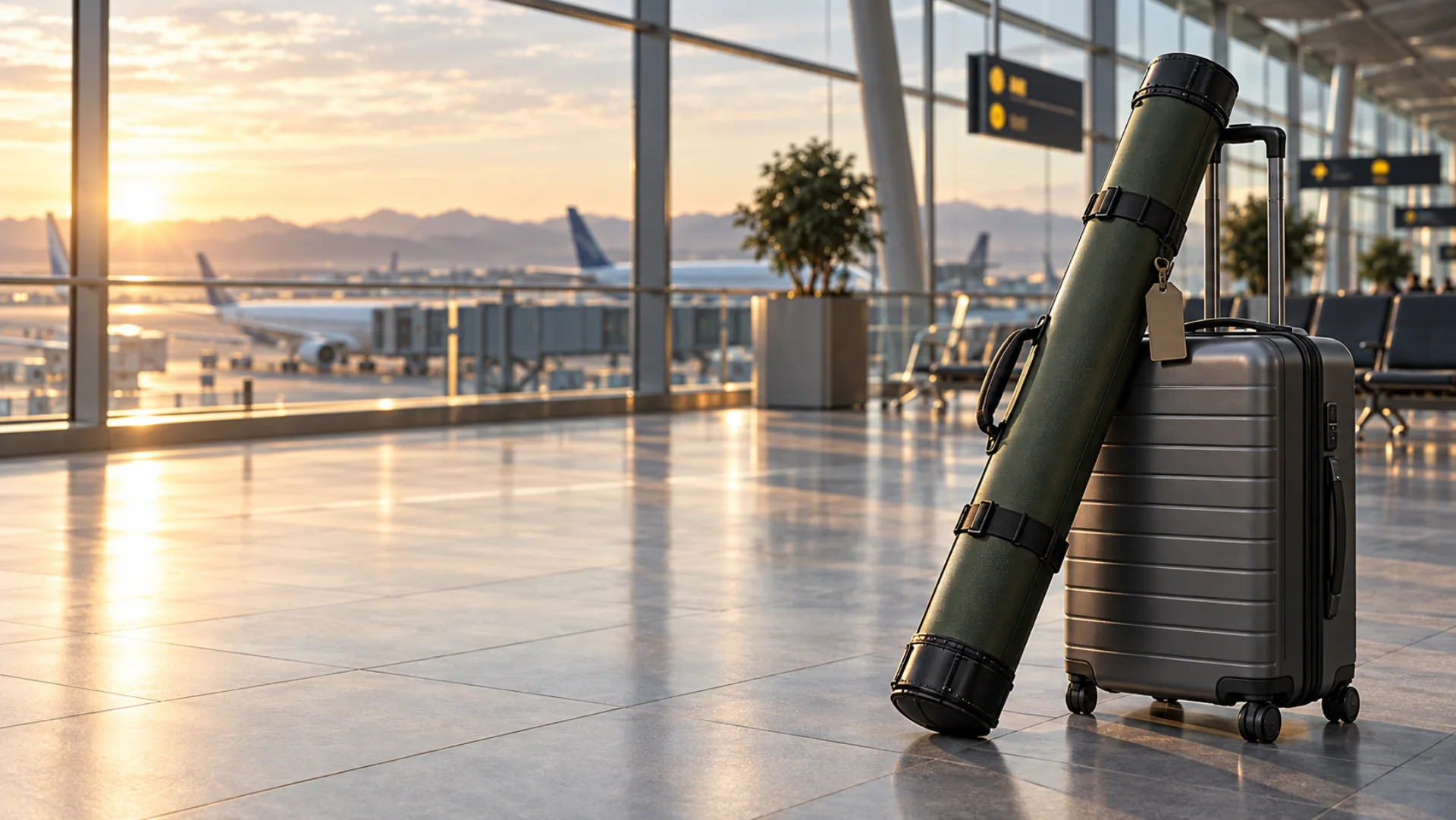
Flying with fishing rods
When flying, a rigid tube reduces damage but does not replace checking airline rules and oversized-baggage handling.
Chat on WhatsAppRodborne recommendation01 02 03 04
Practical checkpoints — Flying with fishing rods
Oversize limits and weight
Secure closure
External identification
Rodborne
Check airline rules before booking
Confirm size and weight limits for every flight segment. Identify the tube and use a closure that cannot open during handling.
Maximum protection
Prepare the tube for baggage handling
Immobilise sections, protect guides and leave no loose objects inside. Photograph the packed rods and closed tube before check-in.
Chat on WhatsAppFlying with fishing rods
Plan from booking to baggage reclaim
Read the conditions for every flight before booking and check them again before departure, especially oversized-baggage rules. Secure the sections and closure, label the tube and photograph its condition before check-in.
- 01Rules for every airline
- 02Oversize limits and weight
- 03Secure closure
- 04External identification
Rodborne · 42 airlines compared
Flying with fishing rods: rules by airline
Compare the rules airlines actually publish for fishing rods: fees, weight, dimensions, advance booking and protective cases. Each profile separates confirmed facts from points that still need checking for your flight.
See the fishing-rod rulesGuides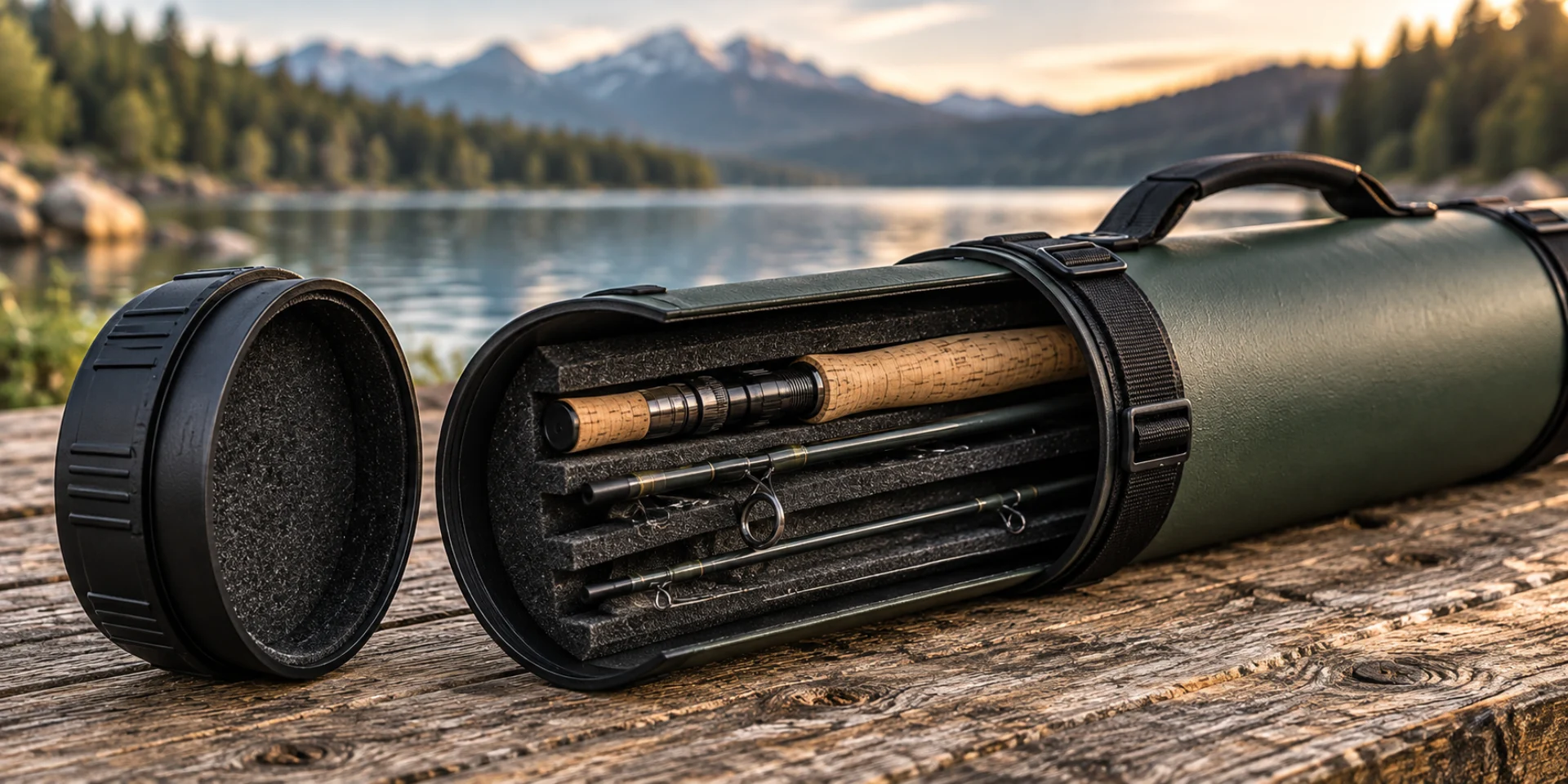

Fishing rod travel guides
Fishing rod tube, case or holdall
Rigid tubes, padded holdalls and light sleeves address different priorities: impact, weight, quick access and carrying capacity.
Chat on WhatsAppHow to choose a fishing rod tube
Choosing a tube means matching internal dimensions, rigidity and capacity to the way the rods will really be moved.
Chat on WhatsAppHow to store and transport fishing rods by car
In a car or at home, rods need protection from loads, excessive heat, moisture and movement during transport.
Chat on WhatsAppFAQ
Frequently asked questions
Is a hard tube automatically accepted as checked baggage?
No. Each airline sets its own size, weight and oversized-baggage rules.
Which conditions should I verify for every flight sector?
Check every sector, particularly when the itinerary uses different airlines or separate tickets.
Why should I photograph and label the tube before check-in?
Photographs record condition at departure, while a label helps identify the baggage.
Flying with fishing rods
€109.99EU price · VAT and delivery within the European Union includedUnited Kingdom: shipping, import charges and taxes are confirmed separately.
Chat on WhatsApp